
Commotion imagines, prototypes, and realizes inspiring AI products, services, ecosystems, and experiences. We invented Animistic Design, giving personality to AI by developing backstories, characters, and POVs that reveal the character of the system - affordances, limits, and biases.
Prior Disruptees: Philips, TU Delft, Nestlé, Infiniti, Razorfish, Paul Allen's Interval Research, The Germs, U2, Yoko Ono
Animism moves AI from "Invisible Tool" to "Legible Partner."
Emerging technologies like AI have unexpected affordances, limits, ethical implications, and outcomes: to keep pace, you need provocative new visions, tools and methods.
IDEAS & EXPERIMENTS
Work with Commotion to succeed through bold experimentation, critical reflection and challenging the default. Our approach discovers the risks and opportunities. Unlock hidden value in ways that conventional approaches can't.
Your organization can embrace:
-
CRITICAL PROTOTYPING
Think by sketching rough prototypes, slowly reflecting, and wrestling with bad ideas -
STRATEGY AND ETHICS
Define an ethical strategy that aligns with the user's values and mission while creating meaning -
TURN THIS TRAIN AROUND
Adapt your plans to emerging technology and ideas to invent more meaningful outcomes -
PROVOCATIONS
Equip your creatives, staff, and management with the right courage to experiment with AI through provocative hands on challenges -
CUSTOM TOOLS

We'll help you develop custom tools for your team to enhance sketching in AI
-
SHAKE IT UP

Help your team get a disruptive attitude about AI

![]()
Still thinking about @philvanallen's new, great #AI-for-#UX-designers toolkit: http://philvanallen.com/portfolio/delft-ai-toolkit/… (think: Lego Mindstorms for AI w/wizard of Oz puppeting as a key component of the workflow)
As designers move from the #design of individual things to complex ecologies of smart things, some older conceptions that influenced the development of #AI may have renewed relevance https://hubs.ly/H0fYHwl0 @mikekuniavsky, @xeeliz and @philvanallen detail in @interactionsMag

“One of the things we have to think about designing for AI is people’s perceptions of AI (i.e. Smart, Social, Inuitive, Alive) In fact, AI is quite dumb. It’s the exact opposite of what people think it is (i.e. Kinda Smart, One POV, Awkward, Very limited, Not alive).” @philvanallen #dwpdx
Artificial Intelligence: “It has to be a designed artifact not just a tech artifact.” @philvanallen Thank you @JLRIncubator for the discussion as part of @DesignWeekPDX.

Commotion is a leading innovator in AI

Design & AI Symposia
In 2022, 2023 and 2024 Phil co-produced the premier symposium on Design & AI in Europe. These sold out events […]

Designing Smart Objects in Everyday Life
Designing Smart Objects in Everyday Life Phil contributed a chapter called Sketching and Prototyping Smart Objects ISBN: 9781350160125

Big Data. Big Design
Big Data. Big Design Why Designers Should Care About Machine Learning – Phil contributed an essay called Animistic Design ISBN: 9781616899158

“Useless AI” Symposium
This symposium was hosted at the Media Design Practices MFA program at ArtCenter College of Design. It was curated by […]
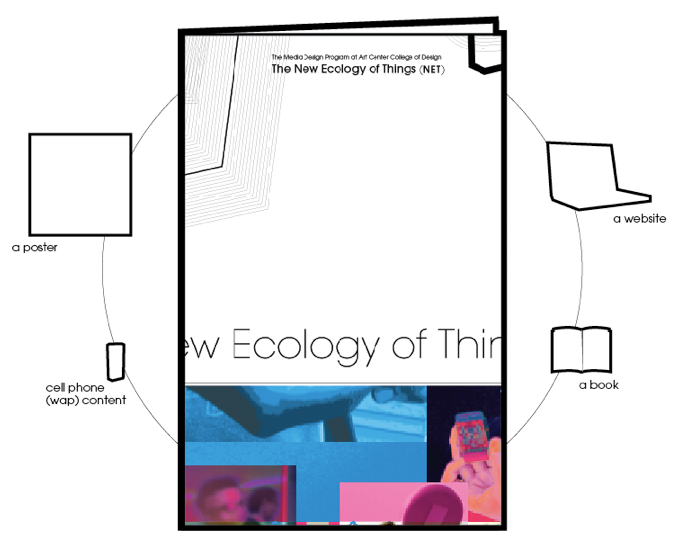
The New Ecology of Things
The New Ecology of Things publication was a research initiative that explored emerging forms of interactive communication brought about by […]

Reimagining the Goals and Methods of UX for ML/AI
This article was presented as part of the 2017 Spring AAAI Symposium at Standford University – It challenges UX conventions […]

Articles for ACM Interactions Magazine
Special Topic: Designing AI – As part of the AAAI Symposia series (2017–2018), Elizabeth Churchill (Google), Molly Steenson (CMU), Mike […]

Critical Prototyping – A New Approach
This article defines a new approach for prototyping that’s appropriate for designing with new technologies like AI and XR. Critical […]

Animistic Collaborators in Mixed Reality
This project explored how virtual, AI based, non-anthropomorphic animistic entities could work as colleagues and collaborators in Mixed Reality, especially in […]

Delft AI Toolkit
The Delft AI Toolkit is a system for designing and researching smart things.
FAQ
What are your services?
We help you reimagine AI - Work with us
What is AI?
We think of AI as Augmented Intelligence. While understanding the potential problems with AI, we believe in using data, design and computation to make humans and organizations better at their craft
How do you see foresight?
In a dialog we'll examine your organization to discover how the future may impact your planning.
How do you approach Strategy and Ethics?
Data collection and analysis by AI creates a high potential for invasion of privacy, security risks, bias, discrimination, and the unwanted commercial exploitation of our personal data/activities. Given these risks, a thoughtful strategy for AI that is aligned with the user's values and mission needs to be developed.
Do you offer training and workshops?
Yes. By working hands on with AI prototyping, we help your team develop a stronger understanding of AI as a material to shape
Who is Philip van Allen?
Phil is a long-time innovator, researcher and expert in the design of new technologies. He is a maker, writer, speaker, educator, and expert at the intersection of AI, networks, media, data, and the new ecologies these create. Working in a range of platforms and scales, he discovers new approaches (such as animistic design) and possibilities, bringing them to life in surprising ways. He has experience in startup, corporate, entertainment, education, and research contexts. Phil has co-organized the European Design & AI Symposium for the last three years. He has an extensive network in the worlds of design and AI. For more details, interact with Phil’s AI assistant at commotion.ai.
Who are past clients of Phil's?
Philips, TU Delft, Nestlé, Infiniti, Acura, Razorfish, George P Johnson, Launch Magazine/Yahoo, The Huntington Art Collections, USC Rossier School of Education, Interval Research, The Germs, U2, Yoko Ono
Ethics Further discussion
AI Errors: Machine learning depends heavily on being trained on examples, and if the example data is bad or mislabeled, the system can make serious mistakes such as the infamous "gorilla" problem with Google Photos. For example, Google Photos uses AI to tell you who or what is in your photos. But in a horrible example of racism that comes from naive design, poor hiring practices, bad data, and inadequate testing, the system started identifying black people as gorillas.
Unintended Bias: AI can unintentionally reproduce the biases of the designers, organizations, cultures that are the context for creating the system. AI can help reduce bias, but it can also bake in and scale bias — Machine learning depends heavily on being trained on examples, and if the example data is bad or mislabeled, the system can make serious mistakes.
Surveillance: AI can be used to track people both online and IRL, and this tracking info must be secured by the organization responsible for the data (e.g. home security/automation vendors). Another area of concern is facial recognition in public areas, which can be used to identify where specific people are without their permission. For example, a company (Clearview.ai) is currently compiling photos from social media for facial recognition, and selling an app to police, governments, and others so they can identify people within seconds of capturing a photo.
Privacy: AI can notice very subtle patterns that can reveal private information. For example, a high school student who shopped at Target started receiving pregnancy related marketing before she had told her parents she was pregnant. This is a classic case of unintended consequences, where the sending of marketing materials both revealed private information and made people feel creepy.
Labor disruption: While AI has the potential to increase satisfaction and decrease the drudgery of work, it also can replace or demotivate existing workers. For example, autonomous freight trucks may put some truck drivers out of work. Workers may also feel like their skills are not being utilized well when they must follow what an AI system instructs them on what to do. For example, some delivery workers who have to follow AI created directions are unhappy they can't use the navigating skills and knowledge that they are proud of. These problems for workers are not limited to physical labor, but can indeed affect knowledge workers and their job satisfaction and performance.